

Few tactical shooters in 2026 are as engaging and addictive as VALORANT, and my daily match streaks are proof of that. The competitive title continues to dominate the FPS genre with its cutthroat gunplay, unique agent roster, and high-stakes teamwork.
But if you’re jumping into the battlefield for the first time, the experience can feel overwhelming. From mastering recoil patterns and learning maps to understanding agent abilities and surviving brainy plays, VALORANT has a pretty steep learning curve for beginners.
That’s exactly why I’ve prepared this VALORANT beginner guide: To help new players understand the fundamentals, avoid common mistakes, and start improving faster without feeling lost.
What is VALORANT?
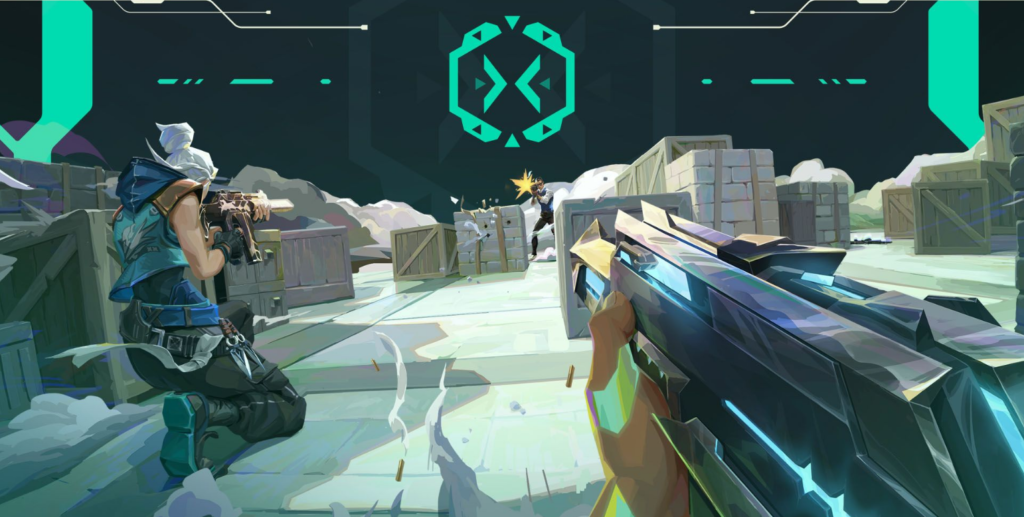
So, what is VALORANT as a game? Simply put, it’s a free-to-play first-person tactical shooter developed by Riot Games, available on PC, console, and mobile. Released in 2020, the game has only continued to grow in popularity, establishing itself as one of the biggest competitive FPS titles in the world.
What makes VALORANT stand out is how seamlessly it blends precise gunplay with dynamic character abilities. Unlike traditional shooters that rely entirely on aim, VALORANT introduces a hero-based system without compromising the genre’s tactical depth. Every match demands smart positioning, teamwork, communication, and mechanical skill.
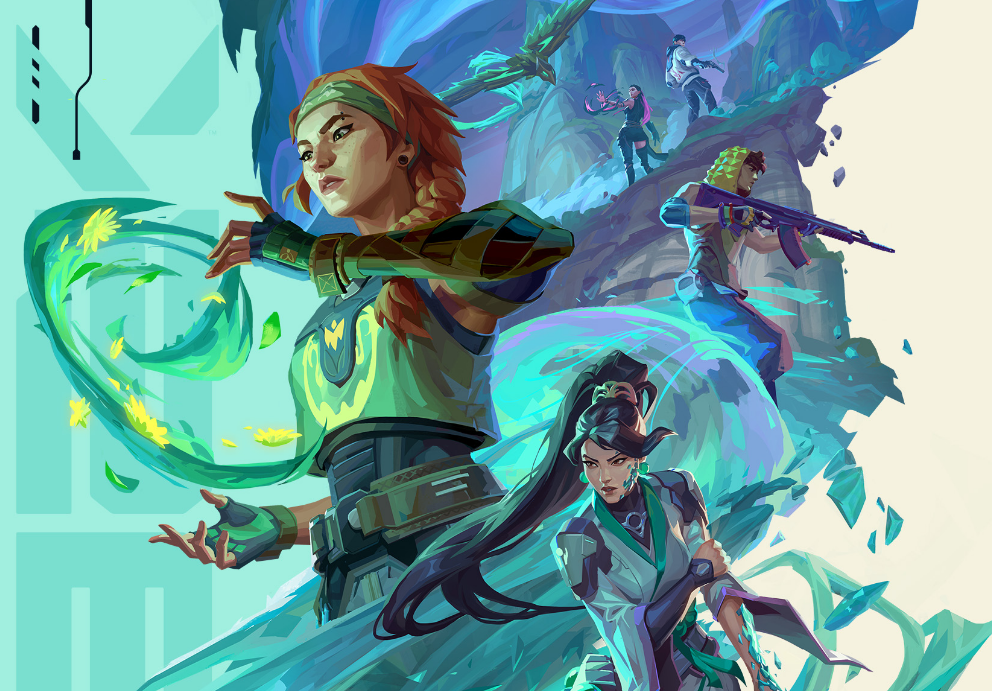
The game features a diverse roster of Agents, each built around a distinct playstyle and skill ceiling. Some Agents specialize in gathering intel, while others excel at blocking vision, healing teammates, controlling areas, or aggressively pushing enemies out of position.
How VALORANT gameplay works
The first step to shedding off the beginner status and “getting better” is to understand how the VALORANT gameplay basics work.
Attack vs. Defense
For starters, it follows a five-versus-five two-team format. At the start of a match, you’ll be assigned to a side and asked to pick an agent before the action begins. Once the match starts, your objective depends entirely on your team’s role: attackers or defenders.
If you’re on the attacking side, your team’s goal is to plant a device known as the Spike at one of the designated bomb sites and successfully protect it until detonation. Defenders, on the other hand, must prevent the plant from happening or defuse the Spike before it explodes.
This simple objective structure is what gives VALORANT its tactical depth. Every round becomes a battle of positioning, communication, utility usage, and precise gunplay.
Round system
Every match is played in rounds, each lasting 1 minute and 40 seconds. Every round is preceded by a Buy Phase, which usually lasts 30 seconds and allows players to purchase guns, shields, and abilities. The first Buy Phase of the match, along with the one after the side switch, lasts 45 seconds instead.
Teams switch sides halfway through the game, which happens after 12 rounds. The first team to secure 13 rounds wins the match. However, if both teams manage to reach 12 rounds each, the match goes into overtime.
During overtime, the sides switch every round, and the first team to win two consecutive rounds claims victory.
Shooting and gun mechanics
As a beginner, mastering VALORANT’s shooting and movement mechanics should be your top priority. Everything else comes later, but you can’t overlook your crosshair placement.
To train your aim game, you need to keep three basics in mind.
Don’t move and shoot
One of the most common beginner mistakes is running while firing. In VALORANT, moving drastically reduces accuracy. Players who stand still while aiming almost always win gunfights.
That said, a little RnG can come in handy sometimes, especially with weapons like the Phantom, Spectre, and Stinger.
Always aim for headshots
Similar to most tactical shooters, headshots are extremely rewarding in VALORANT. Many weapons can eliminate enemies instantly with a single headshot, making precise aim more important than spraying bullets wildly.
Master recoil control
Every weapon in VALORANT features a unique recoil pattern. You can’t just hold down the fire button and get your bullets to land on your target perfectly.
To control a weapon’s recoil in VALORANT, you need to move your mouse or controller in the opposite direction of the recoil pattern. For example, if your weapon starts moving upward while firing, you should gradually pull your aim downward to maintain accuracy.
The easiest way to avoid recoil is to adopt tactics like short bursts or tap firing, instead of spraying. If you’re already in the habit of spraying and praying, I’d suggest training your mentality to fire two to three bullets at a time. You can do that by spamming multiple Deathmatch games until you start burst-firing reliably. You can also try popular aim routines to train your crosshair placement.
Best weapons
Every VALORANT gun comes with unique benefits. Some offer increased damage at the cost of recoil, while others are easier to handle but may be unreliable in certain situations. Go for the one that suits your playstyle, but in case you’re confused, here’s what I prefer to play with and why:
- Ghost: For pistol and save rounds, silenced bullets and low recoil, quick reload time, and perfectly priced to afford both gun power and abilities.
- Spectre: The best SMG, for anti-eco buy rounds or light buy.
- Guardian: For light buy rounds, high damage, and wall pen potential, accurate.
- Vandal: The most reliable automatic rifle, hands down.
- Operator: If you’re great at sniping and have the economy to afford this one, go for it… blindly.
VALORANT agents, explained
One feature that separates VALORANT from traditional tactical shooters is its Agent system. Each Agent has a unique set of abilities that influence gameplay in different ways. Understanding these roles is essential for teamwork and strategy.
Duelists
Duelists are aggressive fraggers designed to take fights first. Their kits focus on mobility and damage.
- Jett
- Reyna
- Phoenix
- Iso
- Raze
- Neon
- You
Sentinels
Sentinels specialize in defense, healing, and holding sites.
- Sage
- Killjoy
- Cypher
- Chamber
- Deadlock
- Vyse
Controllers
Controllers block enemy vision and help teams take control of areas using smoke abilities.
- Brimstone
- Omen
- Viper
- Clove
- Miks
- Harbor
- Astra
Initiators
Initiators gather information and help teammates enter contested areas safely.
- Sova
- Breach
- Skye
- Fade
- KAY/O
- Tejo
- Gekko
For beginners, sticking to one or two agents is usually the best way to learn the game faster.
Maps overview
Every VALORANT match takes place on a specific map, and map knowledge is incredibly important. You’re required to learn common angles, hiding spots, and rotation routes, which will help you with:
- Predicting enemy movement
- Position better
- Use abilities effectively
Here’s a list of all VALORANT maps as of Season V26, Act Three:
- Ascent
- Bind
- Haven
- Breeze
- Fracture
- Abyss
- Corrode
- Lotus
- Sunset
- Pearl
- Icebox
- Split
Only seven maps are in competitive rotation at a time. The rest are playable in casual queues like Unrated, Swiftplay, Spike Rush, Escalation, and Custom.
Each VALORANT map has unique layouts and strategic approaches, which means adapting your playstyle becomes a huge part of improving.
VALORANT Ranking System
The VALORANT ranking system is designed to measure player skill in competitive matches. Players unlock ranked mode after reaching the required account level of 20. Once unlocked, you need to play placement matches to receive your first rank.
The ranks are:
- Iron
- Bronze
- Silver
- Gold
- Platinum
- Diamond
- Ascendant
- Immortal
- Radiant
Every rank except Radiant has three tiers. Radiant represents the highest level of competitive play.
To rank up fast in VALORANT, you need to focus on winning matches and performing better with respect to your teammates and enemies. It all depends on consistency and team coordination. While climbing ranks can feel difficult at times, steady improvement eventually leads to progress.
VALORANT Tips for Beginners
These VALORANT tips for beginners can dramatically improve your gameplay early on.
1. Stick to a couple of agents
Trying every agent immediately can become confusing. Master a small pool first before expanding.
2. Improve your crosshair placement
Always keep your crosshair at head level. Good crosshair placement reduces reaction time during fights.
3. Manage your economy
VALORANT uses an economy system that limits weapon and ability purchases, so managing your credits properly is extremely important. Make sure you know when to buy, save, or eco to avoid putting your team at a disadvantage.
4. Be positive
Try to maintain a positive mindset, even when things aren’t going your way. At the end of the day, VALORANT is still a game: You won’t win every match you play. But staying positive can help your team pull off an unlikely comeback or simply make the experience far more enjoyable.
5. Communicate with teammates
Even simple callouts can help your team win rounds. Whenever you can, open your mic and let teammates know any crucial information, like:
- Enemy positions
- Utility usage
- Rotations
- Low-health opponents
6. Don’t ignore utility
Abilities are just as important as gunplay. Learning when and how to use them can completely change a round.
Common mistakes beginners make
Most new VALORANT players struggle because of a few common habits.
- Running and shooting: Movement accuracy penalties are severe in VALORANT. Always stop moving before firing.
- Ignoring abilities: Some beginners focus only on aim and forget utility entirely. Proper ability usage creates huge advantages.
- Poor positioning: Standing in exposed areas makes you an easy target. Learn safer angles and smarter positioning.
- Lack of communication: Teams that don’t communicate properly often lose to coordinated opponents, even if individual aim is better.
Conclusion
Starting VALORANT for the first time can feel intimidating, but that challenge is also what makes the game rewarding. Every match teaches something new, whether it’s aim control, map awareness, teamwork, or smarter decision-making.
The key is patience. Improvement doesn’t happen overnight, but consistent practice slowly turns confusion into confidence. And once the mechanics finally click, you’ll understand exactly why so many players keep coming back for “just one more match.”
Is VALORANT free to play?
Yes, VALORANT is completely free to play. You can download the game directly from the official Riot Games website. While weapon skins and other cosmetics cost money, they are purely visual and do not provide any competitive advantage.
Is VALORANT hard for beginners?
VALORANT has a steep learning curve, especially for players new to tactical shooters. However, consistent practice and understanding the basics make improvement very achievable.
Can I run VALORANT on a low-end PC?
Yes. Riot Games optimized VALORANT to run well on lower-end hardware, making it accessible to a large audience. But make sure your device meets the minimum requirements to ensure stable performance.
How long does it take to get good at VALORANT?
Improvement depends on practice habits, previous FPS experience, and consistency. Most players notice major improvement after a few weeks of regular play.